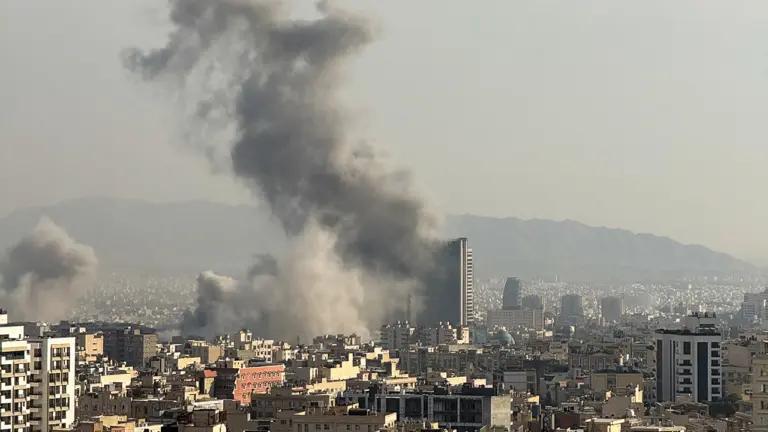
The Iran War Trump news continues to dominate global headlines as tensions between the United States, Iran, and Israel intensify rapidly. What began as targeted military strikes has now evolved into a broader geopolitical conflict affecting multiple regions. The situation is not only military in nature but also deeply political, with strong rhetoric shaping global perception. Former President Donald Trump has taken a central role in escalating the narrative through public statements and warnings. As tensions rise, global leaders are closely monitoring developments to prevent further escalation. The conflict is already impacting global markets, diplomacy, and security frameworks worldwide.
What Triggered the Latest Escalation?
The current phase of the conflict traces back to coordinated strikes launched earlier this year by the United States and Israel on Iranian military facilities. These operations were aimed at curbing Iran’s growing influence and military capabilities in the region. However, Iran responded swiftly with retaliatory missile and drone attacks targeting strategic assets. This cycle of action and reaction has intensified the conflict, pulling multiple actors into the situation. The escalation has been fueled further by long-standing geopolitical tensions and unresolved disputes. As both sides continue to demonstrate military strength, the chances of de-escalation remain uncertain. The region now stands at a critical crossroads with high stakes for global peace.

Strait of Hormuz at the Center of Conflict
A major flashpoint in the ongoing Iran war remains the Strait of Hormuz, a vital route for global oil transportation. Donald Trump has issued strong warnings to Iran, demanding the reopening of this strategic passage. His statements have included threats of severe consequences if Iran continues to disrupt oil flow. This has significantly heightened tensions, as the Strait plays a crucial role in global energy supply. Iran, on the other hand, has firmly rejected these demands and warned of serious retaliation. The situation has raised concerns among international stakeholders who depend on this route. Any disruption here could trigger a global energy crisis.
High-Risk U.S. Rescue Operation
One of the most dramatic developments in recent days was a high-risk rescue mission conducted by U.S. forces inside Iranian territory. The operation aimed to retrieve a downed American airman following a fighter jet crash. Despite the complexity and risks involved, the mission was successfully executed without casualties. This operation demonstrated the advanced capabilities and preparedness of U.S. special forces. It also sent a strong message regarding the United States’ commitment to its personnel. However, such actions have further aggravated tensions between the two nations. Military experts warn that similar operations could increase the likelihood of direct confrontation.
Continued Airstrikes and Counterattacks
The conflict has seen continuous airstrikes and counterattacks from both sides, indicating no immediate signs of slowdown. U.S. and Israeli forces have intensified their operations targeting Iranian military infrastructure. In response, Iran has launched drone and missile strikes across the region, hitting key installations. These exchanges have not only caused military damage but also affected civilian areas. The ongoing attacks have increased humanitarian concerns, with reports of casualties and displacement. The situation remains volatile as both sides continue to escalate their military strategies. This sustained conflict is pushing the region toward prolonged instability.
Trump Claims Progress—But Reality is Complex
Donald Trump has publicly claimed that the conflict is nearing resolution and that Iran’s military strength has been significantly weakened. His statements suggest confidence in a swift conclusion to the war. However, analysts and defense experts present a more complex and cautious outlook. They argue that Iran still retains substantial military capabilities, including advanced missile systems. The absence of complete control over the airspace further complicates the situation. Ground realities indicate that the conflict may continue longer than anticipated. This contrast between political statements and actual developments adds uncertainty to the situation.
Divided Opinion in the United States
The war has sparked intense political debate within the United States, reflecting deep divisions among lawmakers and citizens. Some leaders support the military actions, viewing them as necessary for national security. Others criticize the conflict as avoidable and potentially dangerous. Concerns about economic consequences and human costs are growing among the public. Rising fuel prices and uncertainty about the war’s duration are adding to the pressure. The lack of a clear exit strategy has also become a major point of criticism. This internal division is influencing the broader political narrative around the conflict.
Global Economic and Strategic Impact
The ongoing conflict is having far-reaching effects on the global economy and strategic stability. Disruptions in the Strait of Hormuz have led to fluctuations in oil prices worldwide. Countries heavily dependent on oil imports are facing increased economic pressure. Trade routes are becoming less secure, affecting global supply chains. The uncertainty is also impacting investor confidence and financial markets. Additionally, regional instability is spreading to neighboring areas, raising security concerns. The economic ripple effects highlight the global significance of the conflict.

Diplomatic Efforts and Future Outlook
Amid rising tensions, several countries are attempting to mediate and reduce hostilities between the conflicting parties. Diplomatic efforts are being led by regional and global powers aiming to prevent further escalation. However, progress has been slow, with both sides maintaining firm positions. Iran continues to resist external pressure, while the United States pushes for strategic concessions. The lack of trust between the parties is a major obstacle to successful negotiations. Experts believe that sustained diplomatic engagement is essential for any resolution. The coming weeks will be crucial in determining the direction of the conflict.
Humanitarian Impact of the Iran War
Beyond politics and military strategies, the conflict is creating a serious humanitarian crisis in affected regions. Civilian populations are facing the brunt of ongoing violence and instability. Infrastructure damage has disrupted essential services such as healthcare and transportation. Aid organizations are struggling to operate effectively due to security concerns. The displacement of people is increasing, leading to refugee challenges in neighboring countries. Access to food, water, and medical care is becoming more difficult. The humanitarian dimension of the conflict underscores the urgent need for resolution.
Conclusion
The Iran War Trump news highlights a deeply complex and rapidly evolving global crisis with significant implications. While political leaders express confidence, the ground reality suggests a prolonged and uncertain conflict. The involvement of major powers and strategic regions adds to the gravity of the situation. Economic, political, and humanitarian impacts are already being felt worldwide. The need for balanced decision-making and diplomatic intervention has never been greater. As developments continue, the world remains on edge, watching closely. The outcome of this conflict will shape global geopolitics for years to come.