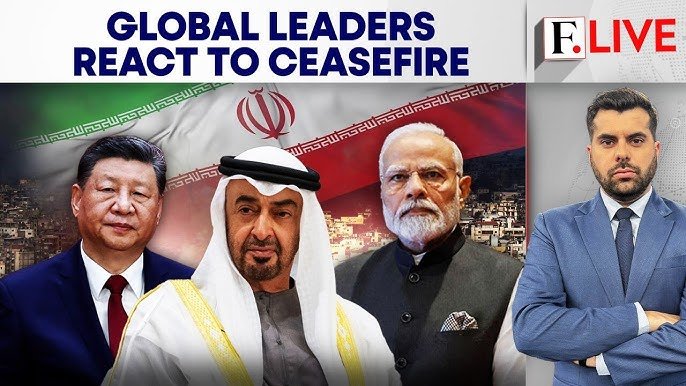
A temporary ceasefire between the United States and Iran has triggered widespread international reactions, with several countries calling it a crucial step toward de-escalation in the Middle East. The two-week truce, brokered with Pakistan’s mediation, comes after weeks of military escalation involving the US, Iran, and Israel.
The ceasefire includes commitments linked to reopening the Strait of Hormuz, a critical global oil route, and has already influenced global markets and diplomatic activity. Countries such as Malaysia and New Zealand, along with European nations, have responded with cautious optimism, urging sustained dialogue and long-term peace efforts.

Global Reactions to Iran Ceasefire 2026
Malaysia, New Zealand and Asia-Pacific Response
Malaysia and several Asian countries have welcomed the ceasefire and acknowledged diplomatic efforts led by Pakistan. Reports indicate that nations in the Asia-Pacific region view the agreement as a stabilising move amid rising economic concerns linked to fuel supply disruptions.
New Zealand has taken a cautious but practical approach. Its leadership highlighted the economic strain caused by the conflict and requested logistical support from the United States to manage fuel shortages in the Pacific region.
Officials from New Zealand also expressed appreciation for diplomatic mediation efforts, emphasising the need for continued negotiation and adherence to international law.
Pakistan’s Role in Ceasefire Mediation
Pakistan played a central role in brokering the ceasefire, hosting diplomatic discussions and proposing frameworks for peace. The agreement followed intense negotiations involving senior officials from the US and Iran.
Pakistan’s leadership has confirmed that further peace talks are scheduled in Islamabad, indicating that the current ceasefire serves as a preliminary step toward a broader agreement.
The mediation effort has received international recognition, with multiple countries acknowledging Pakistan’s role in facilitating dialogue between the conflicting parties.
US, Iran and Israel Positions
The United States described the ceasefire as conditional, linking it to Iran’s compliance with reopening the Strait of Hormuz and broader negotiation terms.
Iran characterised the agreement as a diplomatic success and signalled willingness to pause military operations if reciprocal conditions are met.
Israel confirmed participation in the ceasefire but clarified that certain military operations, particularly in Lebanon, would continue, reflecting differing interpretations of the agreement’s scope.
European and Global Leaders’ Response
European leaders, including those from Germany, France, and the United Kingdom, welcomed the ceasefire and described it as a step away from further escalation.
The United Nations and international organisations have urged all parties to respect international law and prioritise civilian safety. Calls for sustained diplomacy and humanitarian support have also intensified.
Global leaders have emphasised that the ceasefire must lead to a long-term political solution rather than remain a temporary pause in hostilities.
Economic and Strategic Impact
The ceasefire has already influenced global economic indicators. Oil prices showed a notable decline following the announcement, reflecting reduced immediate risk to energy supply chains.
The reopening of the Strait of Hormuz remains a central condition of the agreement, given its role in facilitating a significant share of global oil trade.
Countries dependent on energy imports continue to monitor developments closely, as stability in the region directly affects global markets.
Conclusion
The Iran ceasefire 2026 marks a critical pause in a rapidly escalating conflict involving major global powers. While international reactions remain largely positive, most countries have stressed that the agreement must evolve into a lasting diplomatic solution.
The involvement of multiple stakeholders, including Pakistan, global institutions, and regional actors, highlights the complexity of the situation. The coming weeks, particularly the scheduled negotiations in Islamabad, will determine whether the ceasefire leads to sustained peace or remains a temporary de-escalation measure.
Frequently Asked Questions
What is the Iran ceasefire 2026 agreement?
The Iran ceasefire 2026 refers to a temporary two-week truce between the United States and Iran following a period of military escalation in the Middle East. The agreement includes conditions related to halting hostilities and reopening key global trade routes such as the Strait of Hormuz. The ceasefire also involves indirect participation from regional actors, including Israel, and diplomatic mediation by Pakistan. It serves as an interim measure to reduce tensions while further negotiations are expected to take place.
Which countries have reacted to the Iran ceasefire 2026?
Several countries across regions have responded to the Iran ceasefire 2026. Malaysia and New Zealand have welcomed the agreement and acknowledged diplomatic mediation efforts. European nations including Germany, France, and the United Kingdom have described it as a step toward de-escalation. International organisations have also issued statements urging continued dialogue and adherence to international law. The global response reflects cautious optimism while emphasising the need for long-term peace solutions.
What role did Pakistan play in the ceasefire?
Pakistan played a key role in facilitating the Iran ceasefire 2026 by hosting discussions and contributing to diplomatic negotiations between the involved parties. Reports indicate that Pakistan proposed frameworks for dialogue and helped coordinate communication between the United States and Iran. The country has also confirmed that further talks are expected to be held in Islamabad. Its role has been acknowledged by several nations as part of broader international mediation efforts.
How does the ceasefire affect global oil supply?
The Iran ceasefire 2026 has direct implications for global oil supply due to its connection with the Strait of Hormuz, a critical route for international energy trade. Following the ceasefire announcement, oil prices showed signs of stabilisation as concerns over supply disruption eased. Countries dependent on oil imports continue to monitor developments closely, as any changes in the agreement or renewed conflict can impact global energy markets.
What happens after the two-week ceasefire period?
The two-week period under the Iran ceasefire 2026 is intended to create space for diplomatic negotiations. Officials have indicated that further discussions are planned to establish a more permanent resolution. The continuation of peace depends on compliance with ceasefire conditions and progress in negotiations. International observers and organisations are closely monitoring developments to assess whether the truce leads to a long-term agreement.