Introduction
Aging has long been seen as an irreversible journey, especially when it comes to the brain. Memory fades, learning slows, and cognitive sharpness gradually declines. But what if this narrative is about to change?
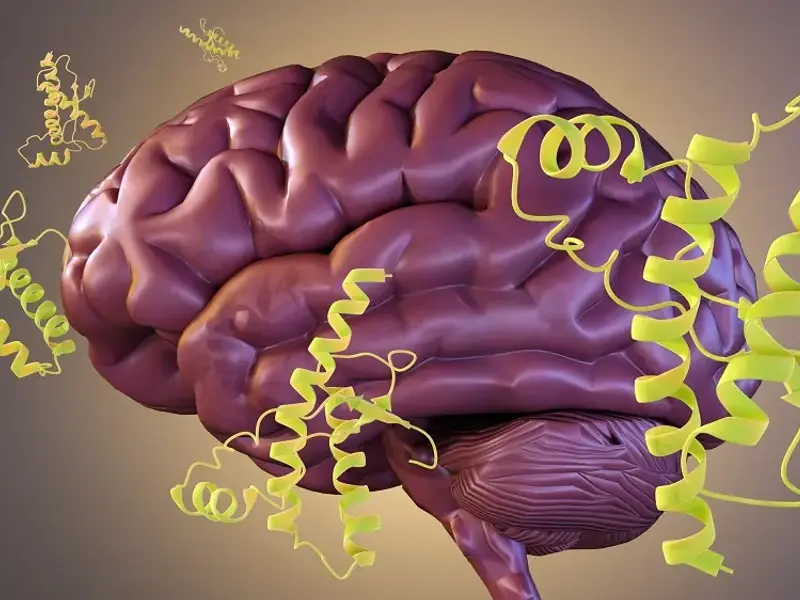
A groundbreaking study from the University of California, San Francisco (UCSF) has uncovered something remarkable — a single protein, called FTL1, that may be responsible for driving brain aging. Even more astonishing, scientists found that reducing this protein didn’t just slow aging — it actually reversed memory decline in mice.
This discovery could reshape how we understand aging itself — not as a fixed destiny, but as a biological process that might be controlled, treated, and perhaps even reversed.
The Brain’s Aging Hub: The Hippocampus
At the centre of this discovery lies the hippocampus, the brain region responsible for learning and memory.
As people age, this part of the brain undergoes noticeable decline:
- Neural connections weaken
- Memory retention drops
- Learning becomes slower
Scientists have long tried to understand why this happens. Many factors were suspected — genetics, environment, lifestyle — but none provided a clear, singular answer.
Until now.
The Breakthrough: FTL1 Emerges as the Culprit
Researchers at UCSF conducted a detailed study comparing the brains of young and old mice. They tracked thousands of genetic and protein changes over time.
Among all variables, one stood out consistently: FTL1.
What they found:
- Older mice had significantly higher levels of FTL1
- These mice showed fewer neural connections
- Their performance in memory tests declined
This was the first clue that FTL1 wasn’t just associated with aging — it might actually be driving it.
What Happens when FTL1 Increases?
To test whether FTL1 was truly responsible, scientists increased its levels in young mice.
The results were striking.
Young brains began to behave like old ones:
- Neurons lost their complex branching structure
- Brain cells formed short, simplified connections
- Communication between neurons weakened
- Memory performance dropped
In simple terms, FTL1 turned young brains old.
Lab experiments confirmed this further. Neurons overloaded with FTL1 failed to build the rich, interconnected networks needed for efficient thinking and memory.
The Turning Point: Reversing Brain Aging
This is where the story becomes extraordinary.
Instead of just studying decline, researchers tried something bold — they reduced FTL1 levels in older mice.
What happened next surprised everyone:
- Neural connections began to regrow
- Brain structure started to restore itself
- Memory performance significantly improved
This wasn’t just slowing aging — it was reversing damage already done.
In the words of lead researcher Dr. Saul Villeda, it was:
“Much more than merely delaying or preventing symptoms — it is a reversal of impairments.”
The Hidden Mechanism: Energy and Brain Function
The study also uncovered how FTL1 causes damage.
It turns out that FTL1 interferes with cellular metabolism — the process by which brain cells produce energy.
Here’s what happens:
- High FTL1 levels act like a metabolic brake
- Brain cells produce less energy
- Low energy leads to weaker neural connections
- Memory and cognition begin to decline
To test this theory, scientists treated brain cells with compounds that boost metabolism.
The result:
Even with high FTL1 levels, boosting energy production prevented damage.
This reveals a crucial insight:
Brain aging is not just structural — it’s deeply tied to energy efficiency inside cells.
Why this Discovery Matters
This research shifts the conversation around aging in powerful ways.
- Aging May Be Reversible
For decades, brain aging was seen as permanent. This study challenges that belief.
- A Single Target for Treatment
Instead of complex, multi-factor therapies, scientists now have a specific protein target — FTL1.
- New Hope for Cognitive Disorders
Conditions like:
- Dementia
- Alzheimer’s disease
- Age-related memory loss
…could one day be treated by targeting similar biological pathways.
From Mice to Humans: What Lies Ahead?
While the findings are revolutionary, it’s important to stay grounded.
Current limitations:
- The study was conducted only on mice
- Human brains are far more complex
- Clinical applications may take years
However, the implications are clear.
This discovery opens the door to:
- Drug development targeting FTL1
- Therapies focused on boosting brain metabolism
- Preventive treatments for cognitive decline
A New Perspective on Aging
For a long time, aging has been treated as an unavoidable decline — something to accept rather than challenge.
But this study suggests something different.
It hints at a future where:
- Memory loss is not inevitable
- Cognitive decline is manageable
- Brain health can be restored, not just preserved
This isn’t just a scientific breakthrough — it’s a shift in mindset.
Final Thoughts
The discovery of the FTL1 protein as a key driver of brain aging marks a turning point in neuroscience.
It tells a powerful story:
- That aging is not as fixed as we once believed
- That the brain retains an incredible ability to heal
- And that science is getting closer to unlocking that potential
While human treatments may still be years away, one thing is clear — the future of brain health looks far more hopeful than ever before.